


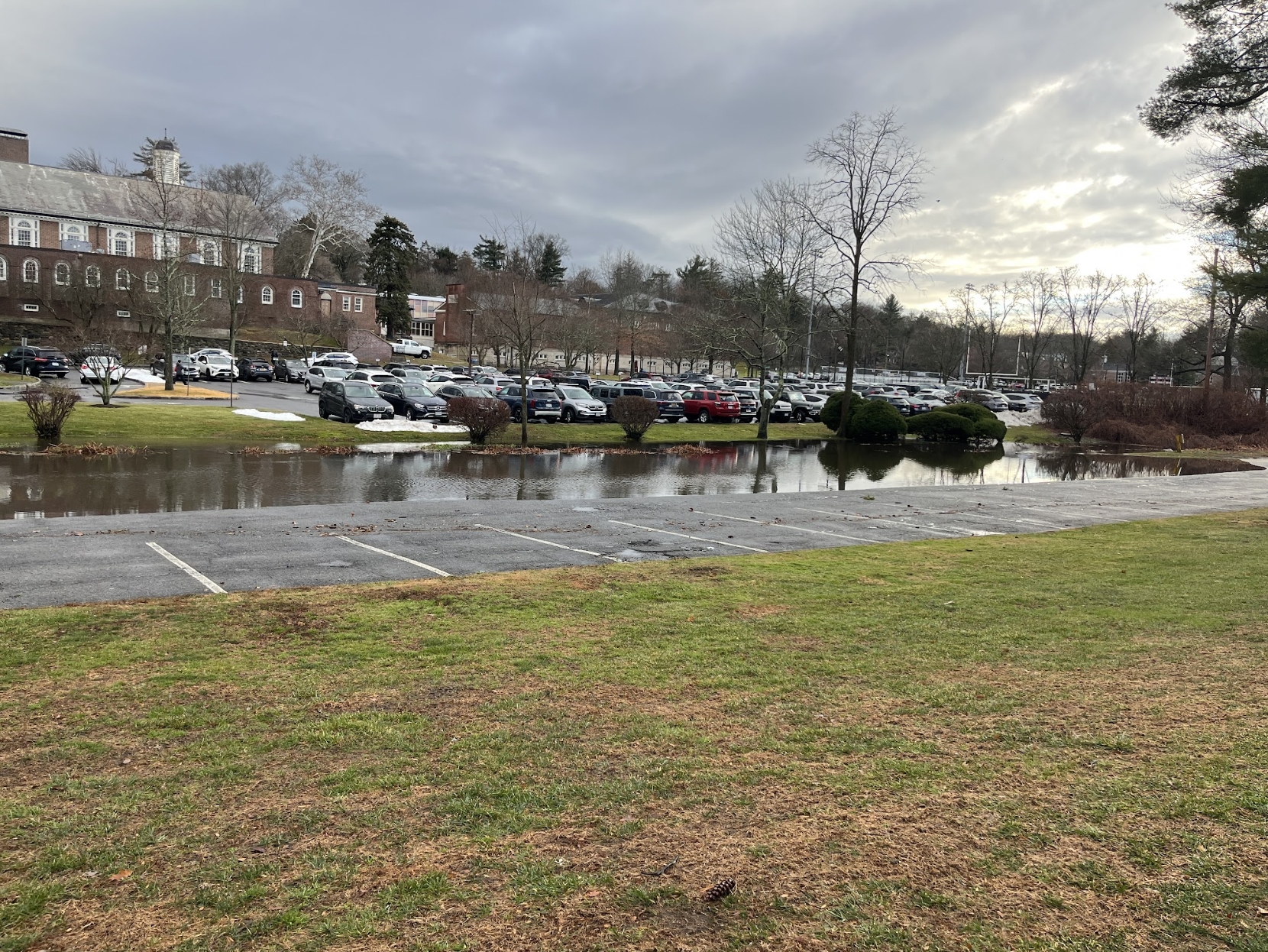
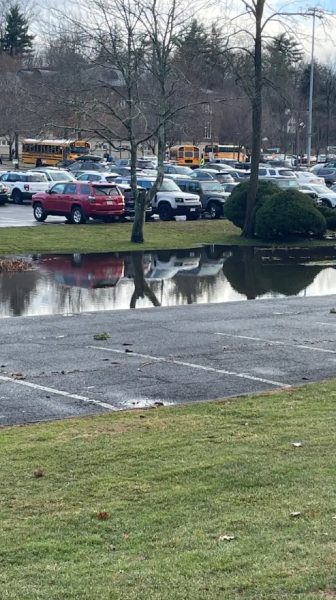
Morning gray clouds that had loomed over the school finally gave way to rain in the afternoon. Rainwater, carried by occasional gusts of wind, whipped against the school walls. Inside the building, humidity dampened the vinyl floors, leaving tacky footprints on the ground. Outside, the water in the brook had already overflowed as it surged downstream. Soon, Principal Kenneth Bonamo announced over the loudspeakers for students and faculty to remove their cars from the gravel lot, which was situated dangerously close to the already flooding creek by Brewster entrance. This infamous Bronx River offshoot was not only known for being prone to flooding during heavy rainfall, but also held an impressive track record of permanently damaging one or two cars each year.
According to Director of Facilities Nick Ferraro, the creek’s vulnerability to flooding is partly due to Scarsdale High School’s location. Being built on a flood plain, flooding risks are inevitable for the school. Flash floods do not occur under most weather conditions, but they are especially common during intense precipitation.
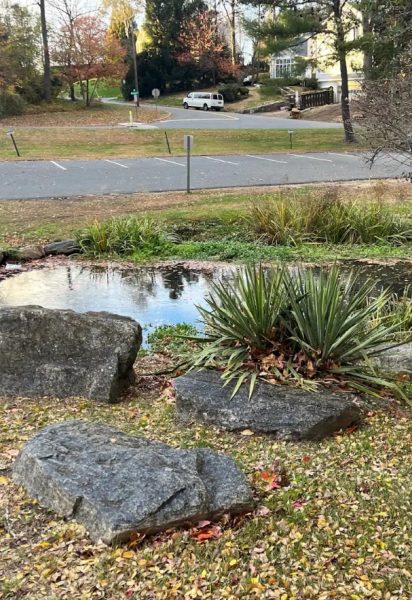
While geographic location increases the brook’s flooding risk, the tributary also has structural issues that worsen this phenomenon. “The problem with the brook is that as the sediment [from nearby soil] builds up over the years, there is less room for the storm water to go. So, it rises a lot quicker and then finds the path of least resistance, which becomes the gravel lot, the brook lot, and even the grass area right by Brewster,” Ferraro explained.
The district has tried to improve the situation in the past with a variety of initiatives. First, there were calls to build a wall partition that would separate the surrounding dirt from the brook’s water, preventing soil erosion, but that initiative has failed to gain headway. Another, more successful, effort introduced by the school was to plant native vegetation near the pickleball and tennis courts. By having greenery further upstream, the plants could absorb some of the stormwater before it became congested by the parking lots.
The high school has invested a lot into flood prevention infrastructure to prevent water from damaging the building. Around the school are sump pumps—machines that collect rainwater through storm drains and pump water away from the building through pipes. Ironically, the excess water is emptied into the brook, so the district must schedule yearly maintenance to remove sediment that has clogged up the creek, allowing water to flow more efficiently and preventing the risk of flooding.
Not only does flooding cause disruptions outside, but it also leads to problems inside the school. During storms, rainwater by Post Road flows down the inclined hill on Scout Field and collects by the athletic entrance. The fitness center is therefore prone to flooding issues because of the lack of necessary drainage infrastructure at Scout Field. Despite these issues, Head of the Custodial Office James Goutzounis is not concerned with water-related issues indoors, as administrators are currently planning to repurpose the grass field with artificial turf, which would have a built-in drainage system below the ground that prevents excess water from pooling.
Another part of the building that requires flood protection is the recently renovated auditorium. With expensive stage mechanics being kept in the auditorium, custodians have to ensure that no water leaks damage the new equipment. So, the school has further invested in new sump pumps to help with drainage near the auditorium. “The auditorium pumps and some of the new pumps that were purchased were probably purchased at around the eighty thousand dollars mark, just to make sure that the equipment we have is functional and new,” Ferraro elaborated.
Reflecting on his eight years at the high school, Goutzounis ranks an incident four years ago as the worst flooding experience when water levels reached the back steps of the cafeteria. “I think school was closed the next day, but I think we got three or four inches of rain, and it came very fast. The river came up, it went over the parking lot bridge over there, so that was all covered, all the parking lots back there were covered,” Goutzounis reflected. One or two cars were also damaged by the flooding. Ferraro recalled another situation when rainwater flooded four feet into the school’s crawl space—the foundational floor or the “basement” of the building.
Goutzounis and other custodians work around the clock to make sure that measures for flooding are in place. Before a storm, weather services inform the custodians of potential hazardous weather. Then, custodians check the condition of the school’s sump dumps and storm drains. If they find issues with the building’s infrastructure, the equipment is promptly replaced before the storm comes.
Flooding at the high school is a persistent problem that continues to affect the periphery of the building, whether it is flash floods by the Brewster lots or by Scout Field. However, the often unseen work of indoor flood prevention by custodians and staff is what allows students to take for granted that learning continues undisrupted, even during the school’s most daunting weather challenges.




![“I personally hope that the passion and anger surrounding stopping [the] Willow [Project] will manifest itself in other climate actions,” Ryan conveyed.](https://shsmaroon.org/wp-content/uploads/2023/03/Green-Minimal-Simple-School-Environmental-Science-Geography-Project-Presentation-900x506.png)







![A screenshot of [@tanyasingerknits]'s Instagram post features the defiled poster placed in a urinal.](https://shsmaroon.org/wp-content/uploads/2026/05/Screenshot-2026-05-02-190834.png)