
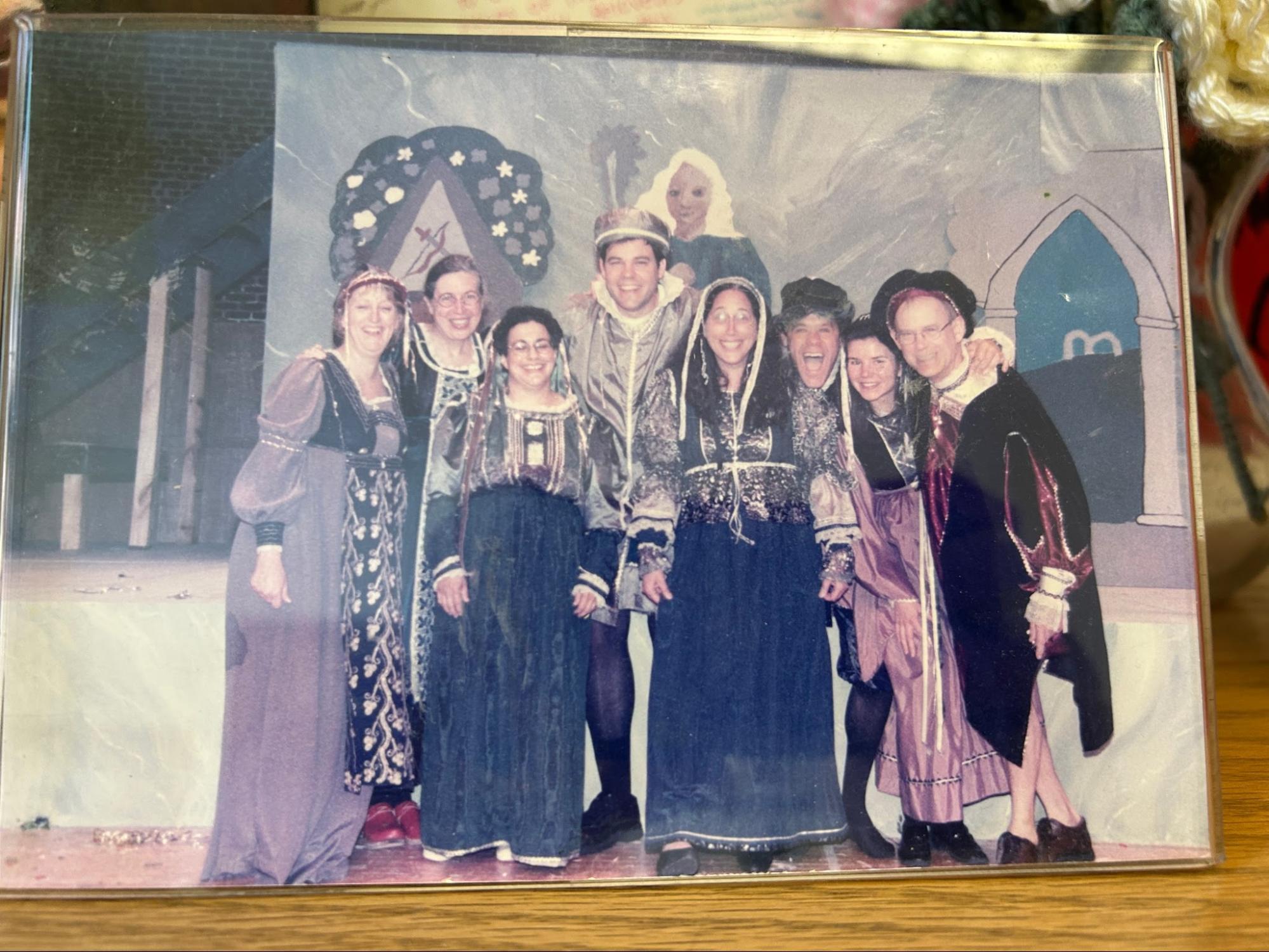
Every spring, the entire freshman class transforms a bare stage into the enchanted woods of Shakespeare’s A Midsummer Night’s Dream. The annual Shakespeare festival has been an SHS tradition for more than twenty years, but many students are unaware of the work that went into creating it.
The festival marks the first time many freshmen perform in front of the entire grade. According to English teacher Nicole Jakymiw, the idea began with English teachers Stephen Mounkhall and Seth Evans.
“They had both taken teaching Shakespeare classes, where you learn to teach it through performance,” Jakymiw said. The teachers thought that the festival would give students a deeper understanding and appreciation of Shakespeare’s work and serve as a final project.
Eventually, the idea worked its way through the English department, where it was decided that a full day would be too long for performances. The English teachers deliberated on what to utilize the rest of the day for. Seniors have prom, and juniors get Junior Olympics, so it only seemed fitting freshmen would get their own event. Subsequently, the teachers came to the conclusion that half the day would be allocated for a field day such that students could enjoy the warm spring weather and be active after half a day of watching performances.
The department loved the idea, but there was still a decision to make. Which of Shakespeare’s thirty-eight plays would be chosen? Would it be a rotation or would it remain the same? After much deliberation, it was decided that A Midsummer Night’s Dream would be the play every year.
“We decided Midsummer would be a really good play to do because it’s comical, and there are a lot of ways that it can be interpreted which would be fun for kids,” Jakymiw explained. Unlike Shakespeare’s tragedies such as Julius Caesar and Romeo and Juliet, Midsummer is a comedy; instead of death and war, it contains magic and fairies. Instead of unsolved chaos, the play concludes with marriage and joy.
Even with the department in agreement, challenges still remained. They had to figure out how to incorporate more than 400 freshmen into a five-act play.
“We didn’t have sets, so the first year sets had to be built,” Jakymiw said. “We no longer have sets because when the auditorium got renovated a couple years ago, everything was thrown away. So right now we’re doing it on a bare stage,” Jakymiw added. She later mentioned that performing without sets has encouraged students to use their imagination when staging their scenes, especially in choosing what costumes, props, and music to use during their performances.
It is not just the students that have work to do. In February, all the ninth grade English teachers hold a meeting to divide the responsibilities of the festival among themselves. The responsibilities include making a seating arrangement for the auditorium, creating the program, and collecting students’ cues and music requests.
At last, all the questions about the festival had been answered and it finally came to fruition. Even after twenty years, very little about the festival has changed. Besides the premade sets and mid-2000s humor, it has remained the same. Freshmen twenty years ago performed the same scenes with the same guidelines.
What began as a little idea between two teachers has grown into one of the most distinctive traditions at SHS. For freshmen, the Shakespeare festival is more than a performance; it is a chance to step out of their comfort zone and a memory that stays with them for the rest of their lives.


![A screenshot of [@tanyasingerknits]'s Instagram post features the defiled poster placed in a urinal.](https://shsmaroon.org/wp-content/uploads/2026/05/Screenshot-2026-05-02-190834.png)