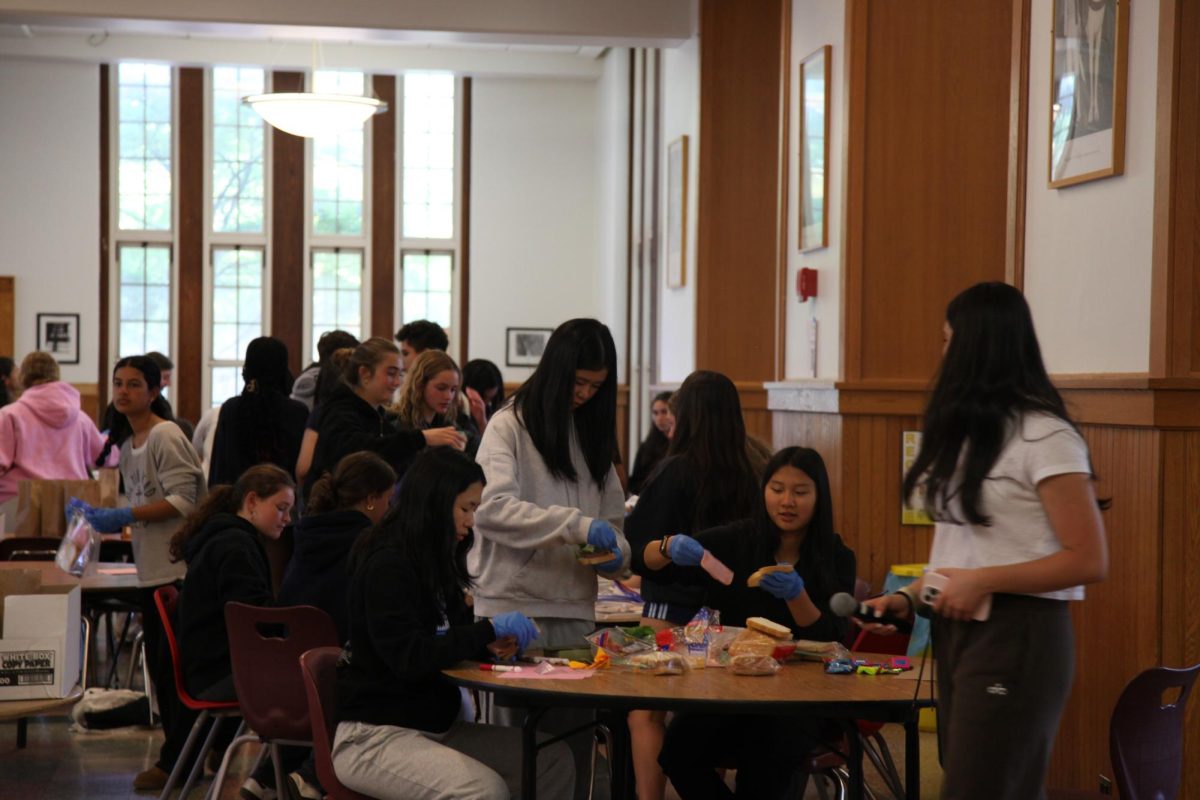


Brring brring. The most dreaded sound among high school students—the 7AM alarm clock. The despair it elicits only intensifies when it rings on a dark, bleak Monday morning, especially after a holiday break. Just a few weeks ago, on Monday, January 5th, Scarsdale students experienced this feeling firsthand. After a week and a half of sleeping in and resting, the abrupt return to early mornings and academic responsibilities felt overwhelming. This common experience has been called “seasonal depression” by many, a phenomenon commonly described as a mix of winter blues, stress, and burnout, which extends throughout the bleak winter season.
Returning to school after break, one of the most significant challenges students face is the sudden loss of free time. After coming back from break, “I feel kind of sad because I’m sleeping less and because I have more work,” Achintya Mishra ’27 said. “In general there’s always the feeling that break’s not long enough,” Iris Wang ’26 commented–a sentiment shared by many students adjusting back to the demanding schedules and workloads of school life.
When asked what they do to mitigate the effects of this seasonal slump, Wang and Mishra both emphasized the importance of taking time after school to relax. However, they noted that sometimes this is not possible given all the other responsibilities a high school student juggles. Wang, like many other students, plays a sport and has practice after school, leaving little time for her to unwind. There are also many cases like Mishra’s. “I usually try to finish all my work early, giving me more time to relax and watch movies,” Mishra explained. Despite their differing approaches, both Wang and Mishra agree that teachers should be more mindful of the potential challenges students face when returning from a long break, suggesting lighter workloads or fewer exams, at least during the first few days back.
One thing high school students consistently lack is sleep. According to Mishra, coming back to school from breaks often exacerbates the issue. After weeks of rest, having to go back to late nights and early mornings as schoolwork and extracurricular activities pile up is no pleasant task.
The problem only worsens as the weeks before February’s Winter Recess go on. “My biggest problem is that I don’t get enough sleep,” Mishra shared. This widespread reluctance to return to school may point to a broader underlying problem—the heavy workloads and expectations that are heaped onto high school students.
Dr. Peter Faustino, one of the school psychologists, offered constructive advice on the transition. “I personally struggled to come back from the break,” he admitted. “Monday was very hard for me, and Monday and Tuesday were some of my busiest days.” Faustino noted that returning to school in the winter months can be a “dramatic transition,” largely due to the shift in routines. During the break, students and faculty alike enjoy the flexibility of waking up and going to sleep later. A sudden return to a rigid schedule can be jarring. To mitigate this problem, Faustino recommends returning to school routines a little sooner; one could wake up earlier as the end of break approaches, for example. He also encourages students who are struggling to adjust to recognize the problem, and then seek help if the feeling persists. Faustino agrees that the transition would likely go more smoothly if adults were mindful about the challenges of returning to school after prolonged breaks.
Olivia Barbezat, a youth outreach worker at SHS, spoke to Maroon about seasonal affective disorder (SAD), and the best ways to mitigate its effects. “The main cause of SAD is reduced sunlight, which impacts serotonin and melatonin levels,” Barbezat explained. To address its impact on the SHS community, Barbezat recommends a mix of several approaches, including, light therapy, psychotherapy (particularly cognitive behavioral therapy), and in some cases, if advised by a professional, medicine.
More accessible methods that Barbezat mentioned include simple lifestyle modifications, such as spending more time outdoors and soaking up the natural sunlight, or even taking extra Vitamin D supplements to help alleviate symptoms.
Ultimately, getting the winter blues is perfectly normal. Whether you are a student or a faculty member, you are not alone. It is important to know that help is available if you need it. SHS has many resources at its students’ disposal, and there are plenty of people willing to help in the building, including but not limited to school psychologists, youth outreach workers, and even teachers.
If this is something that you have been struggling with, you can contact the SHS Student Support Services, or look at the mental health resources offered by the SHS Youth Outreach Program.